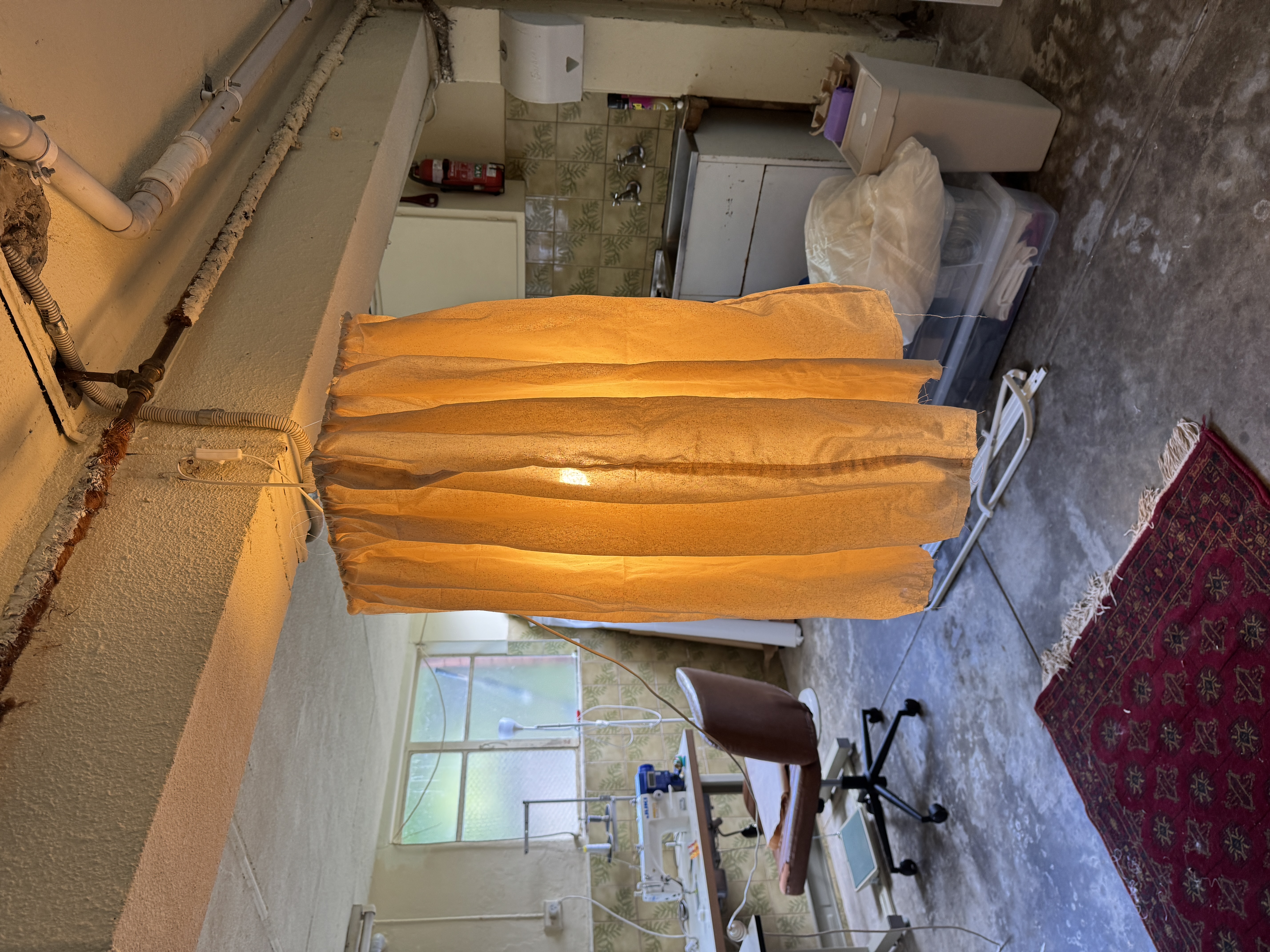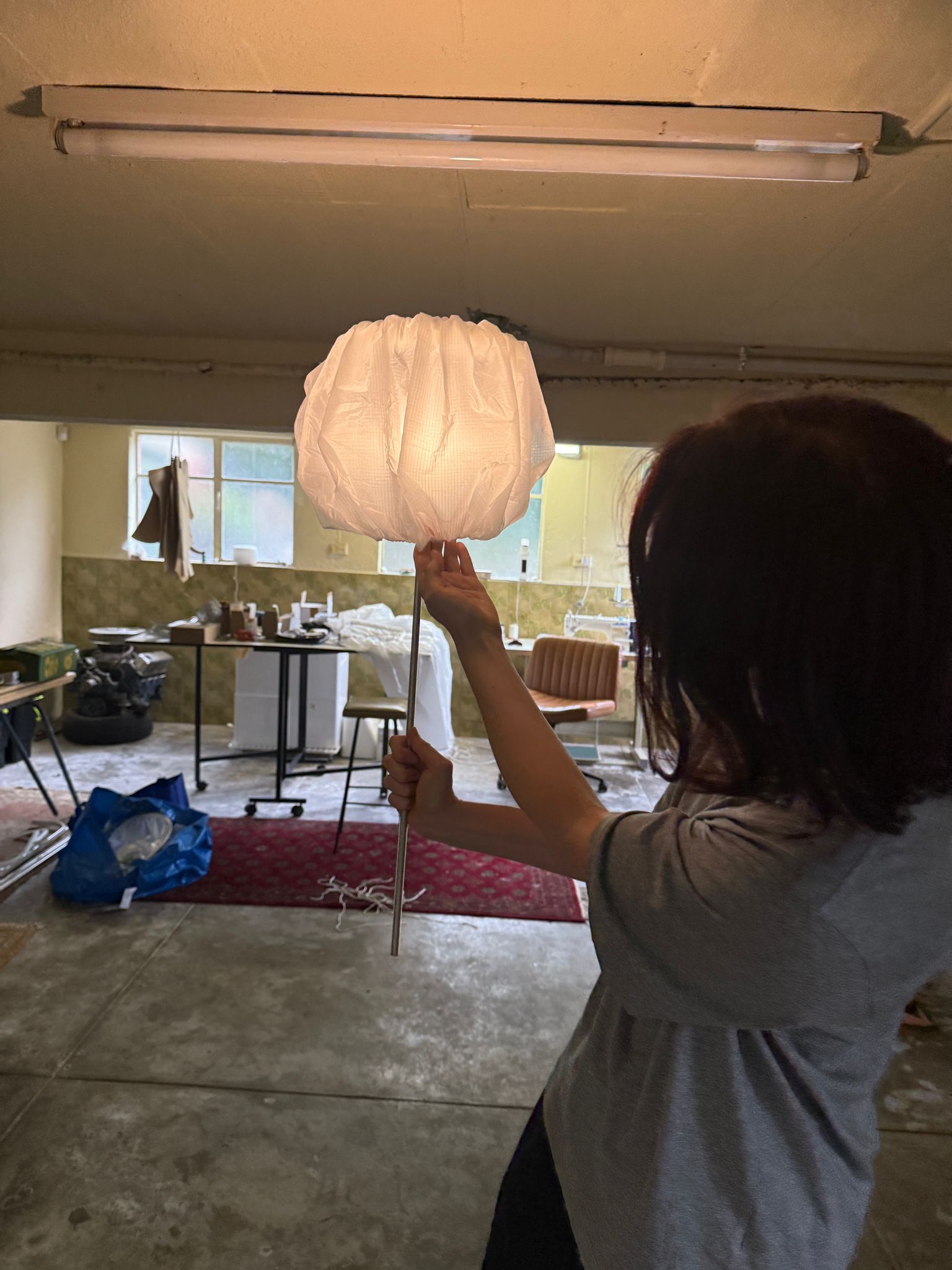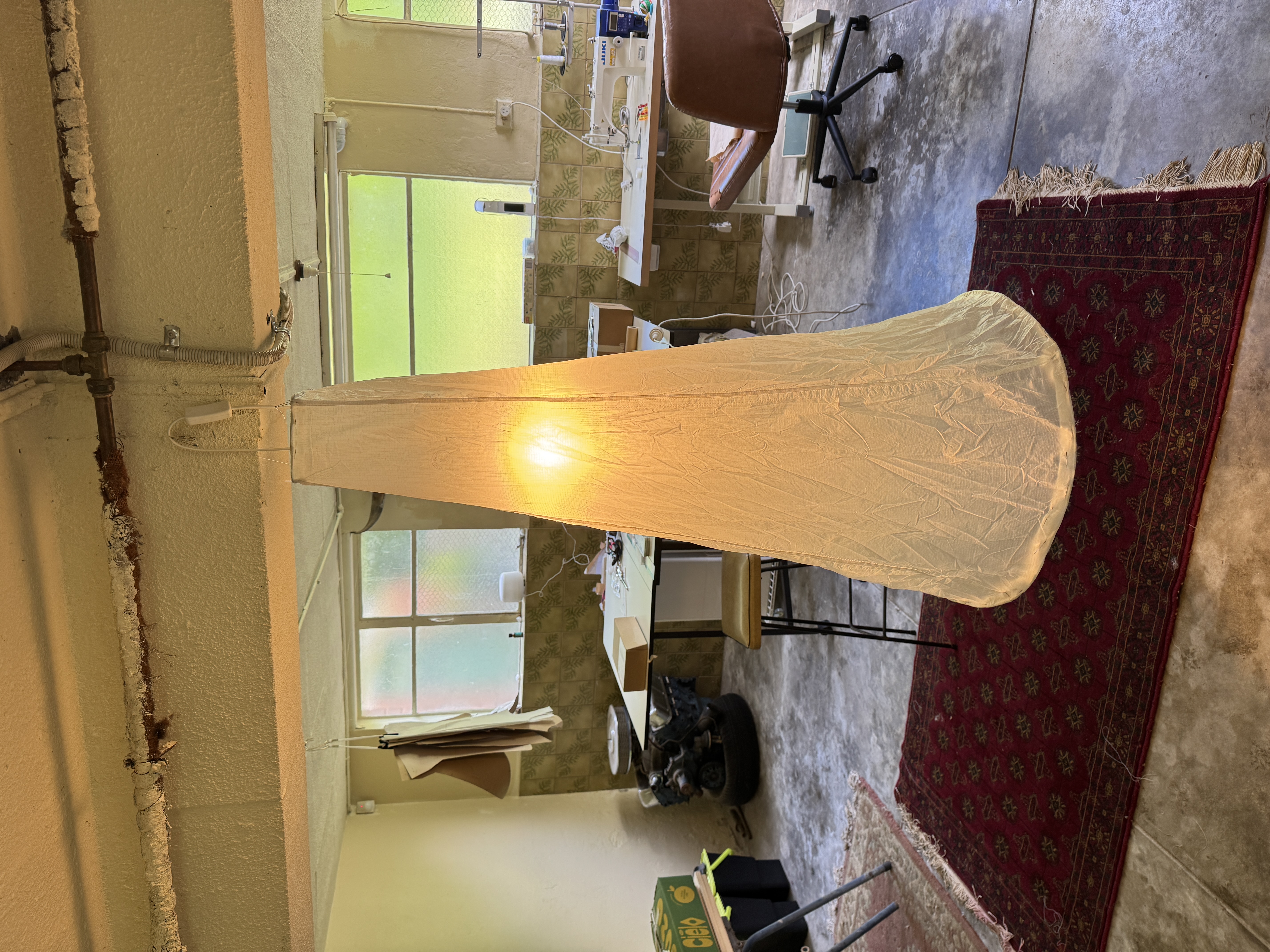
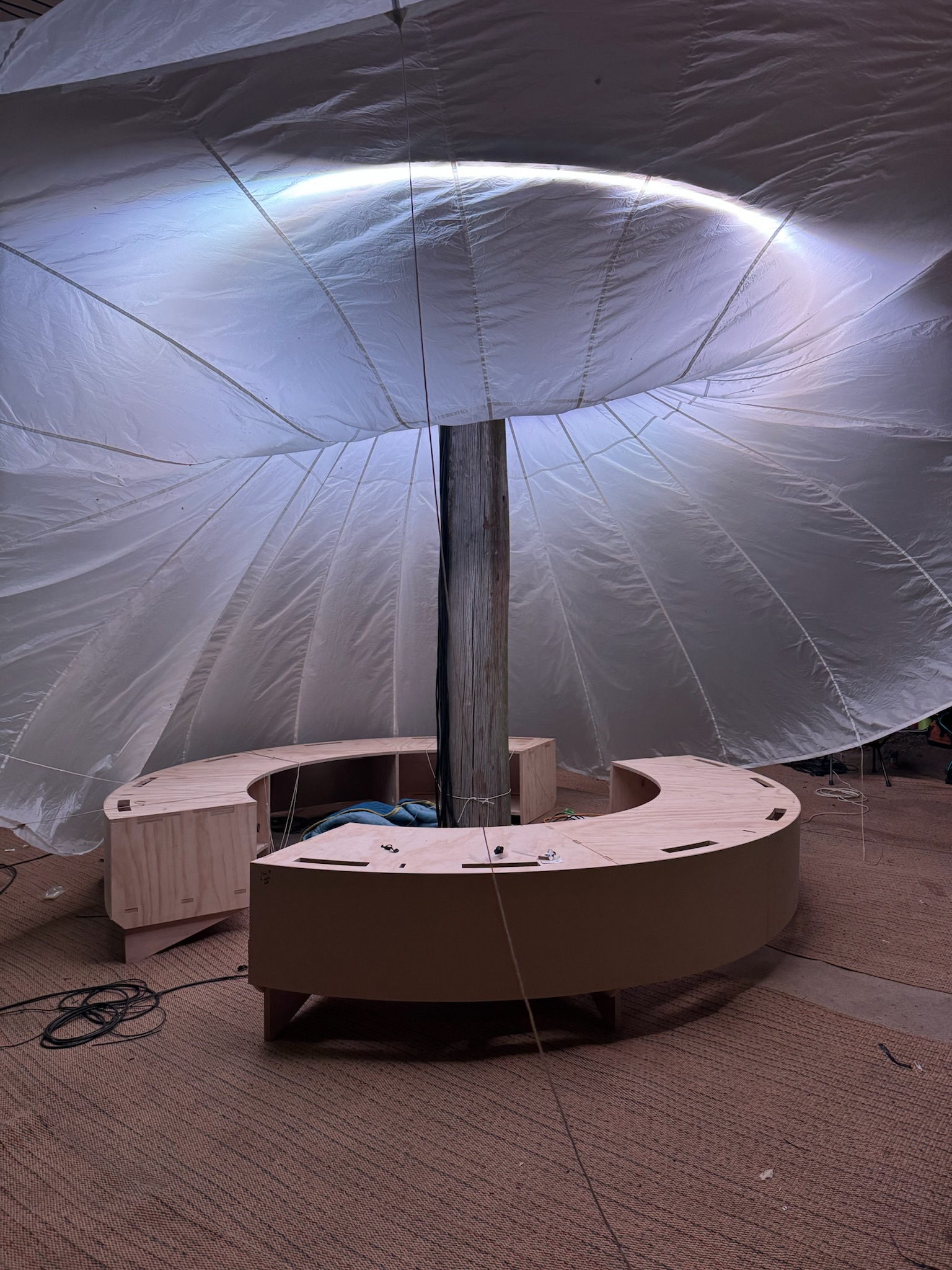
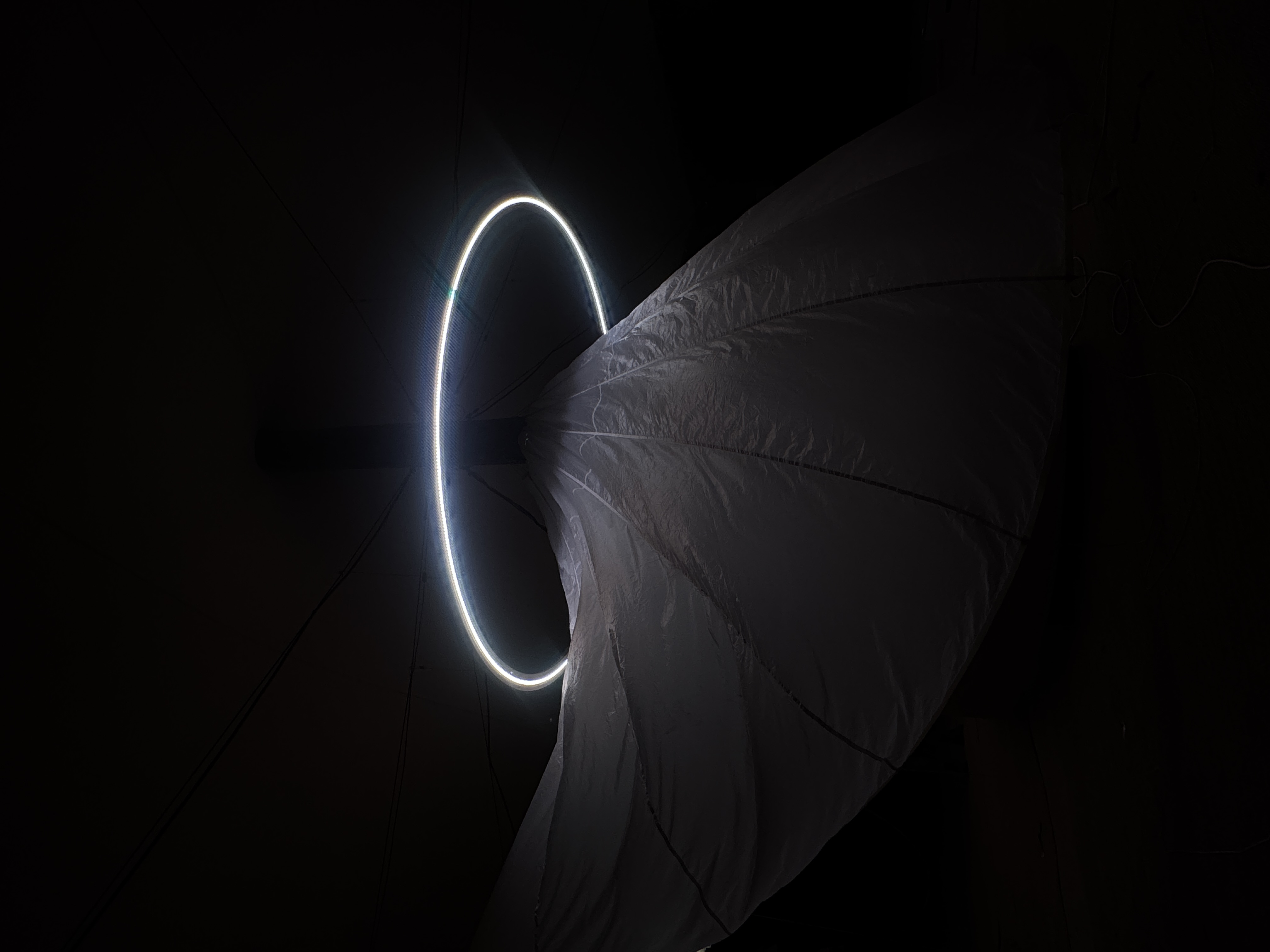
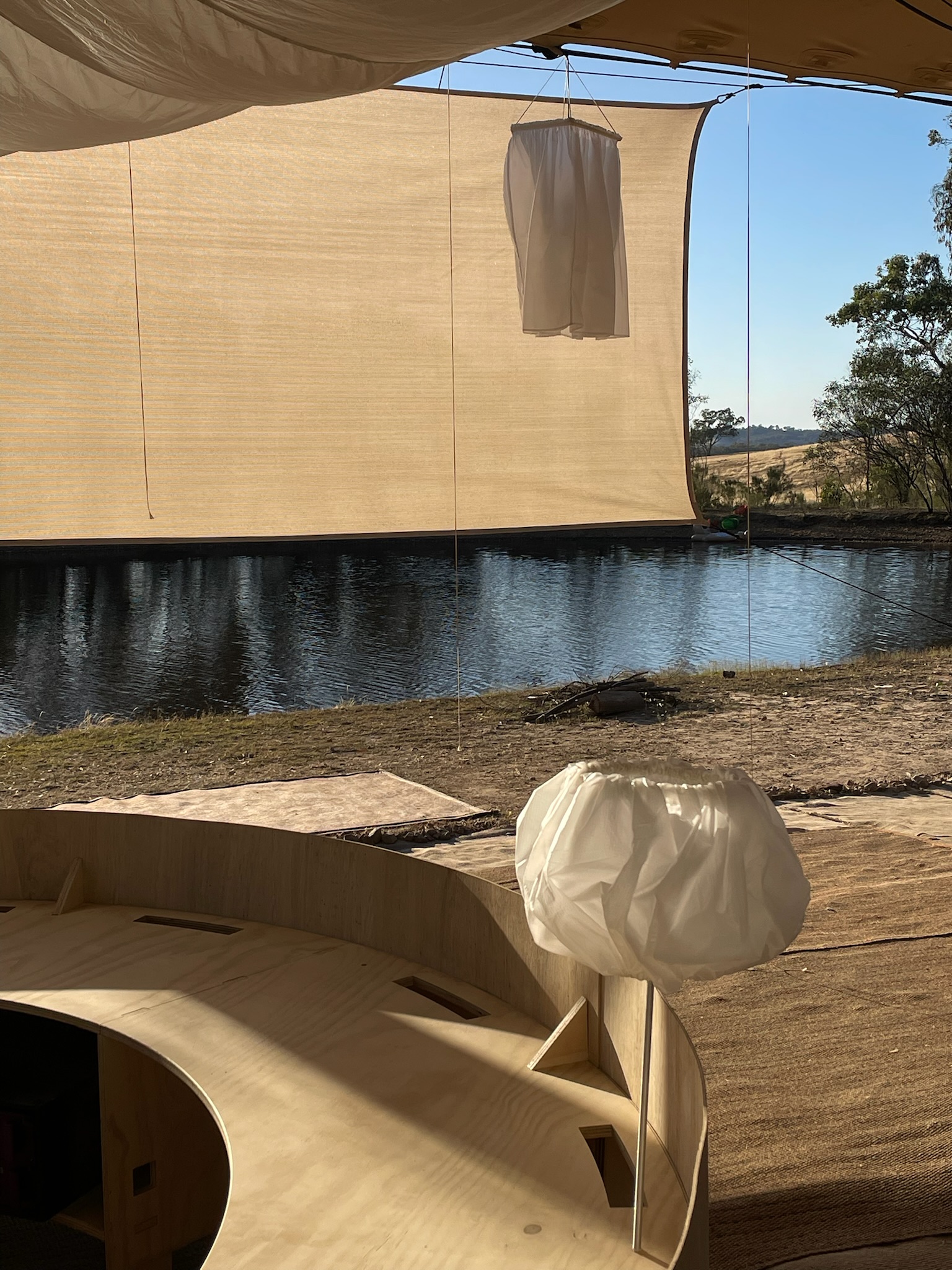
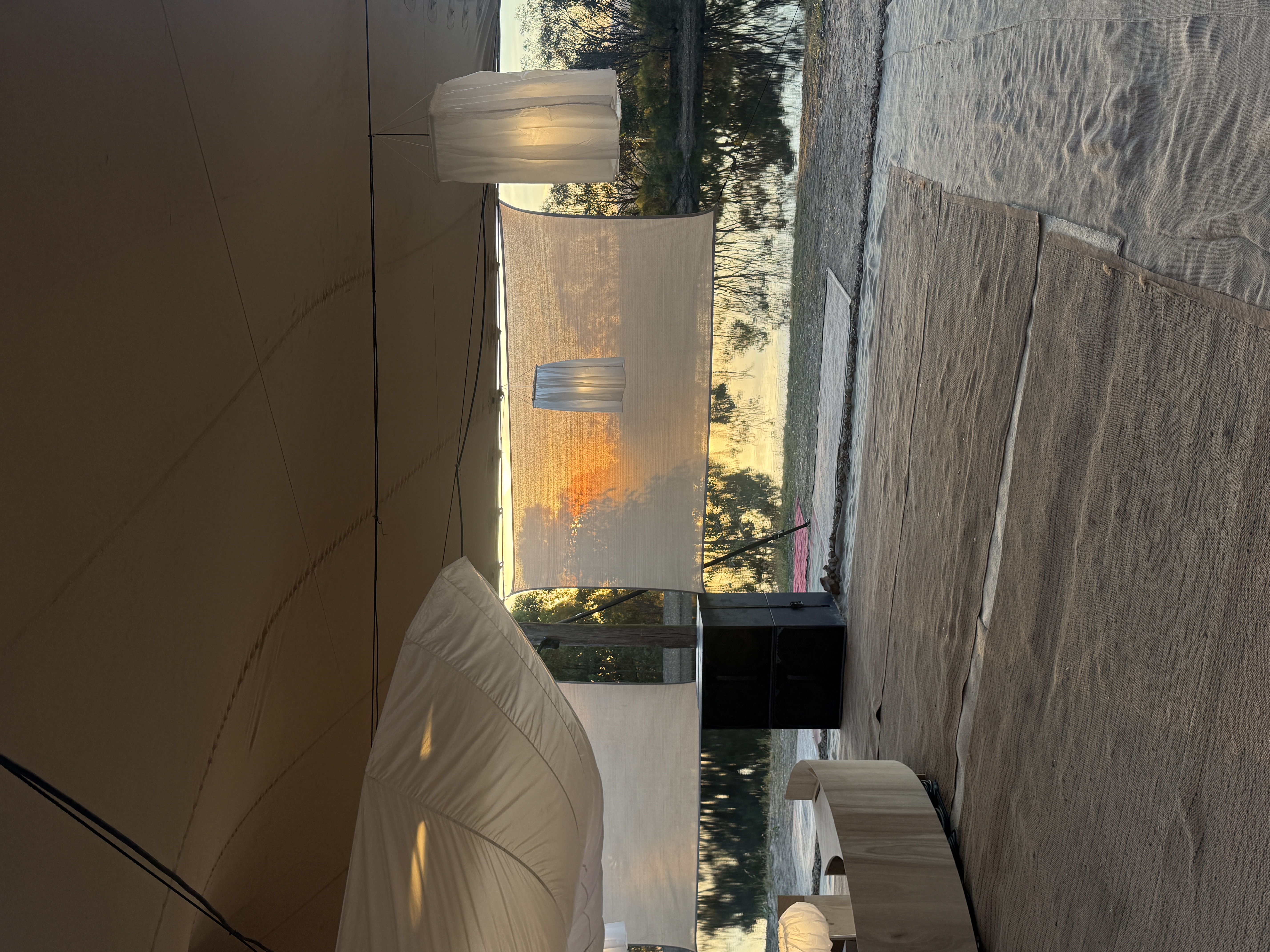
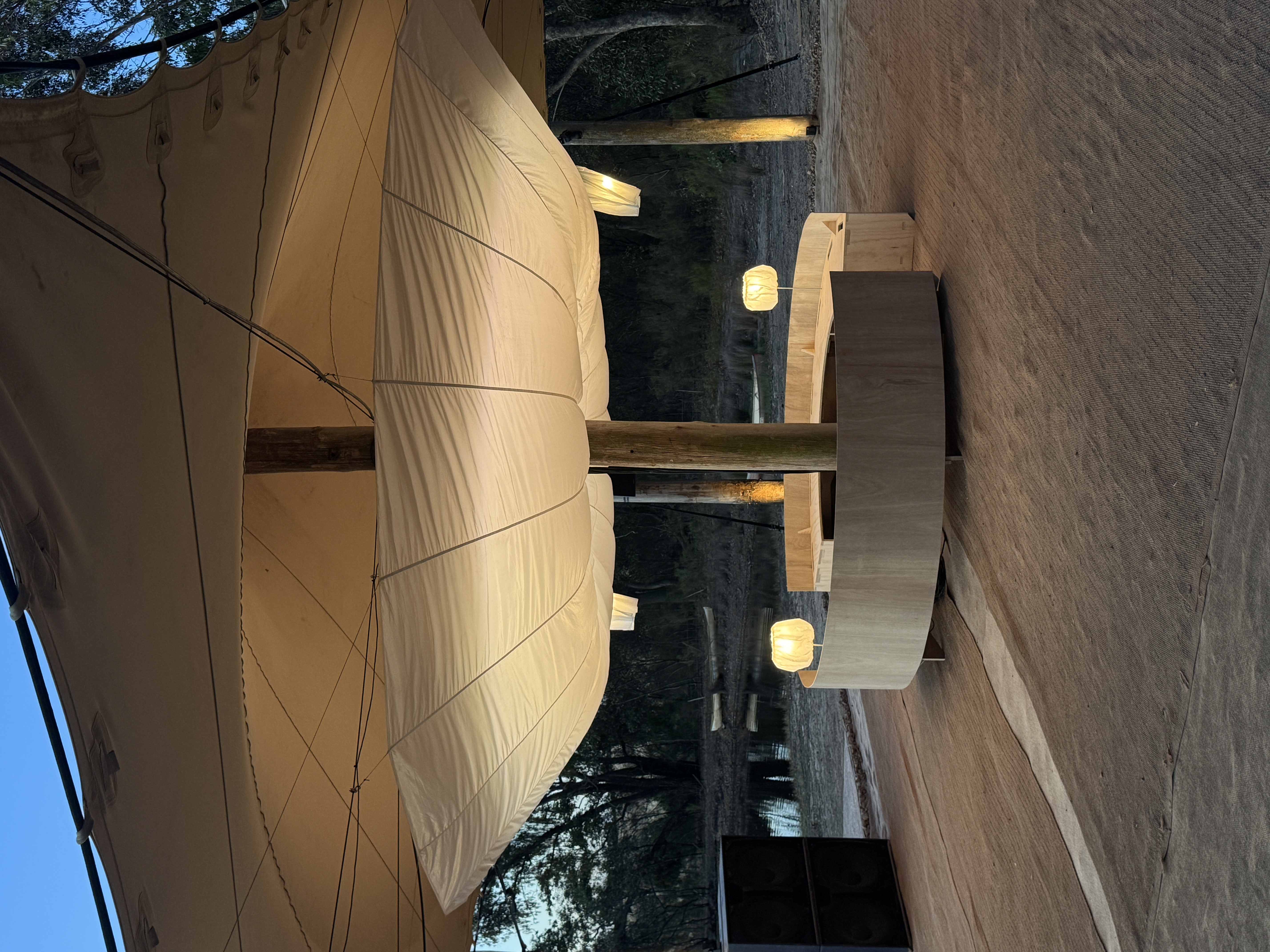
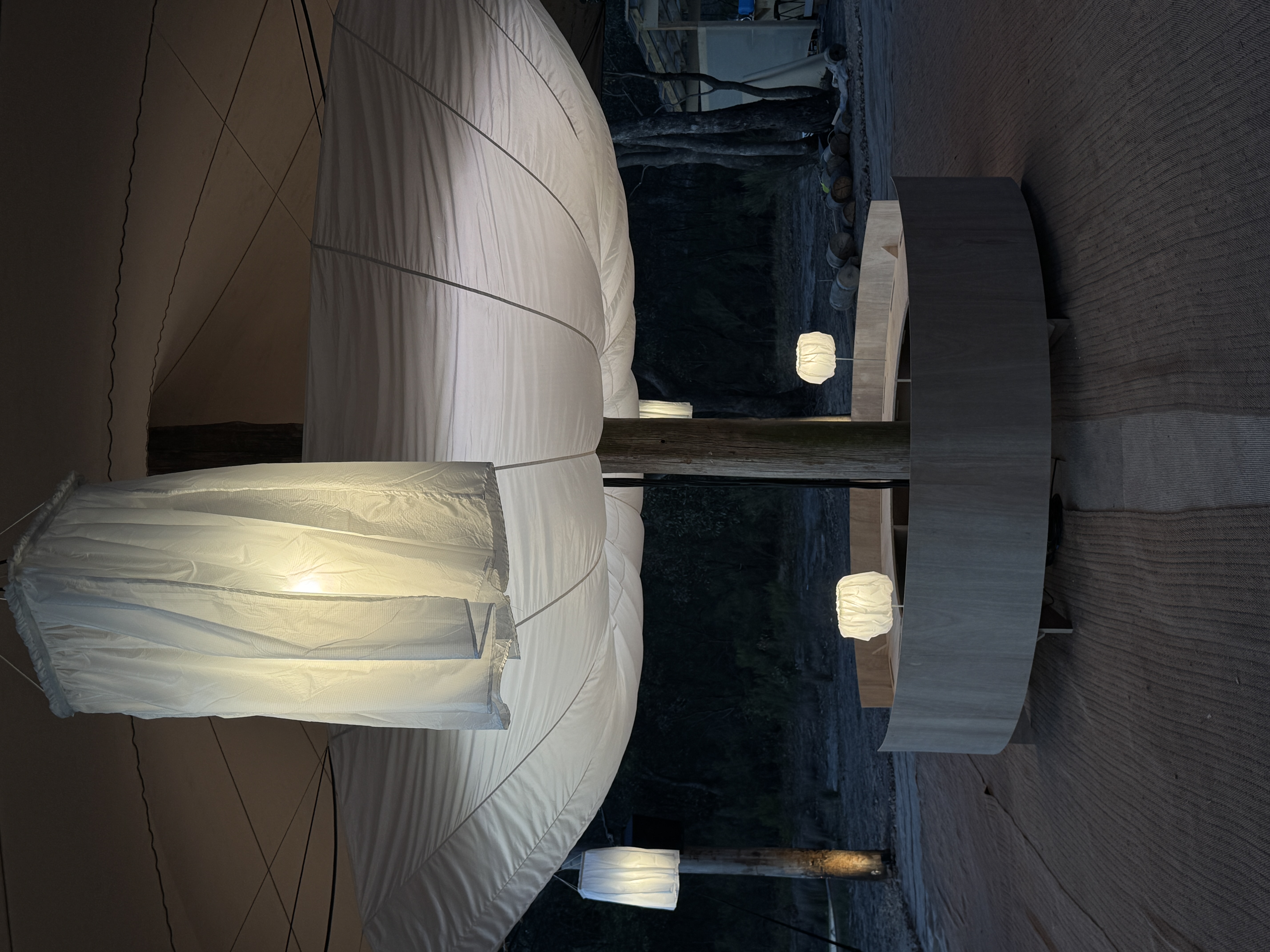
The pavilion was developed as part of UNSEND Festival 2025/2026 in Tallarook, VIC, with a strong emphasis on material reuse, adaptability, and site-responsive design. My contribution focused on the research, design, and development of three distinct lampshade systems intended for both interior and exterior use, functioning as atmospheric and spatial elements rather than purely utilitarian lighting.
This project marked one of my first engagements with off-body design, shifting my practice from the scale of the garment to the scale of space. Rather than responding to the human form, the lampshades were conceived in direct relation to interior and exterior environments, exploring how material behaves when suspended, expanded, and activated by light. This transition allowed for a deeper investigation into space, volume, and materiality, positioning textile not as surface but as architectural presence.
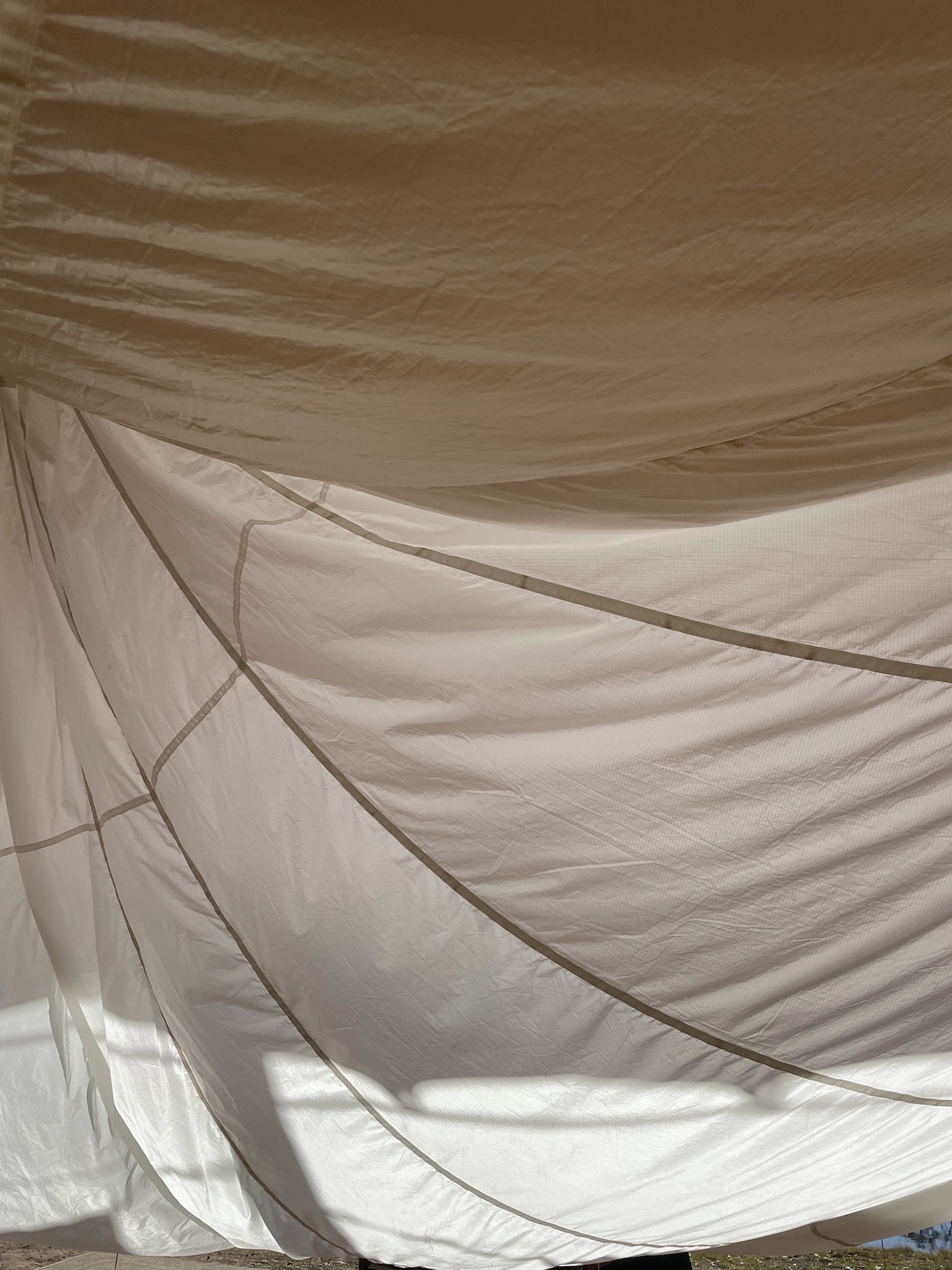
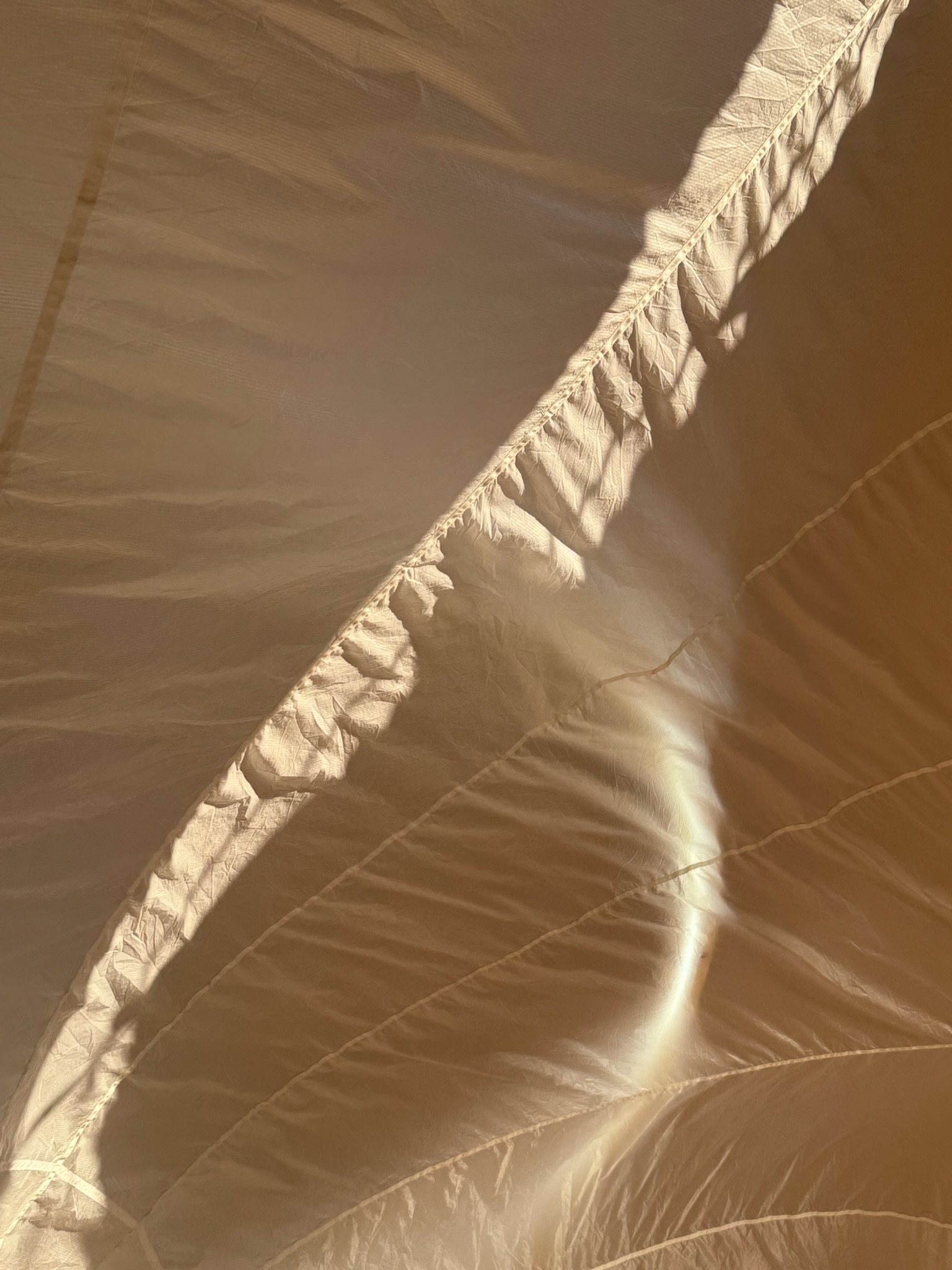
Expired reserve parachutes were selected as the primary material for the lampshades and set elements, embedding sustainability directly into the design process. Originally engineered for emergency and survival, the material was recontextualised into soft architectural forms that provide warmth, orientation, and intimacy within a temporary festival environment. The decision to avoid sourcing new materials was central to the project ethos, allowing the inherent properties and limitations of the parachute fabric to inform form, scale, and construction.
![]()
![]()
![]()
![]()
![]()
This project marked one of my first engagements with off-body design, shifting my practice from the scale of the garment to the scale of space. Rather than responding to the human form, the lampshades were conceived in direct relation to interior and exterior environments, exploring how material behaves when suspended, expanded, and activated by light. This transition allowed for a deeper investigation into space, volume, and materiality, positioning textile not as surface but as architectural presence.
Expired reserve parachutes were selected as the primary material for the lampshades and set elements, embedding sustainability directly into the design process. Originally engineered for emergency and survival, the material was recontextualised into soft architectural forms that provide warmth, orientation, and intimacy within a temporary festival environment. The decision to avoid sourcing new materials was central to the project ethos, allowing the inherent properties and limitations of the parachute fabric to inform form, scale, and construction.